Lemon Pickle: Sweet Nimbu Achar Recipe, Benefits, Variations & the Right Way to Store It
- Rajasthan Healthy Foods
- Jul 2
- 7 min read

Few things capture the soul of an Indian kitchen like a jar of lemon pickle ripening in the winter sun. Nimbu ka achar — tangy, spicy, or lusciously sweet — is the pickle almost every grandmother made, and the one most of us still crave with khichdi on a rainy day. In this complete guide, we cover everything about lemon pickle: the traditional recipe, the famous sweet lemon pickle, instant versions, regional variations from across India, its benefits, and the storage rules most people get wrong — including whether you can store lemon pickle in an aluminium utensil (short answer: never, and we explain why).
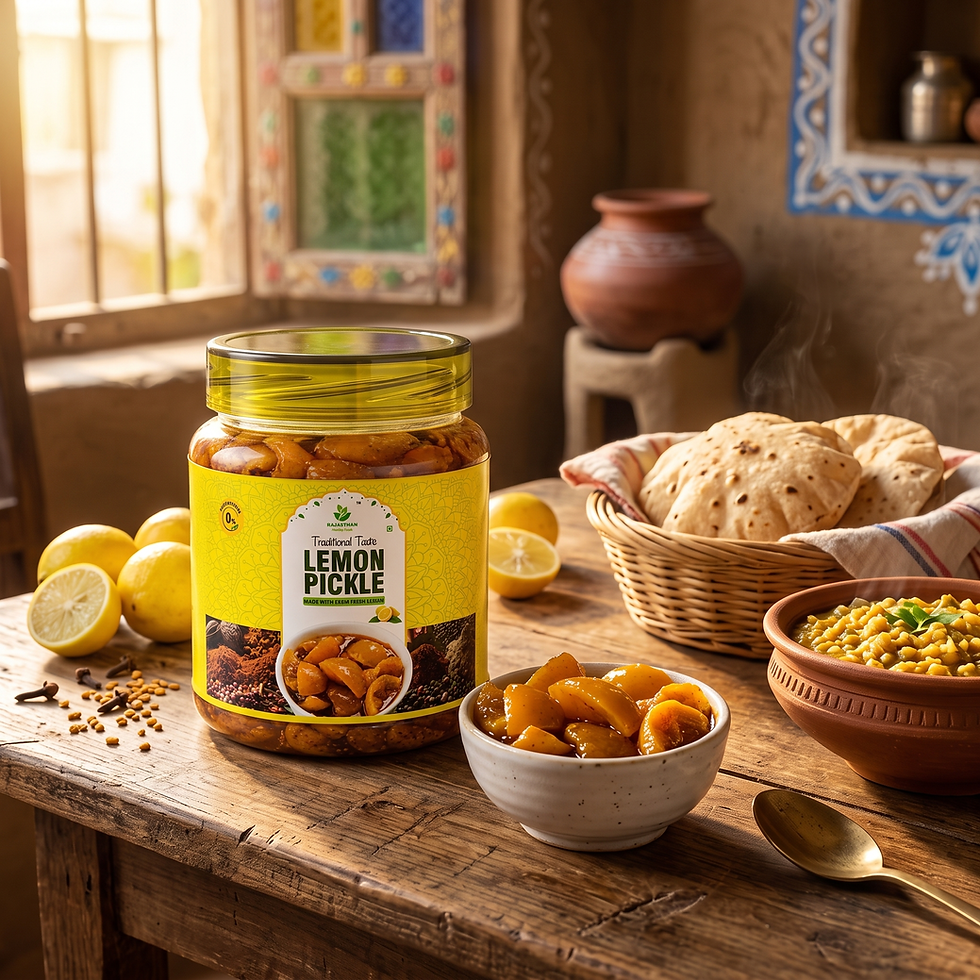
What Is Lemon Pickle?
Lemon pickle — nimbu ka achar in Hindi — is a traditional Indian preserve made by curing lemon wedges in salt, spices, and either oil, sugar, or jaggery. Unlike most Indian pickles, lemon pickle is unique because the lemon cures in its own juice: the salt draws out the citrus liquid, which slowly softens the peel over weeks until it turns tender and mellow. It exists in two beloved forms — the sharp, salty-spicy version and the sweet lemon pickle (khatta-meetha nimbu achar), where sugar or jaggery balances the tang into something almost dessert-like.
Lemon Pickle Ingredients: What Goes Into the Masala
The beauty of lemon pickle is its short ingredient list. Everything depends on the quality of the lemons and the patience of the curing. A classic lemon pickle masala includes:
Fresh, thin-skinned lemons — juicy, unblemished, preferably desi variety
Rock salt or sea salt — the curing agent that does most of the work
Turmeric powder — colour and its traditional place in every achar
Red chilli powder — for the spicy version
Roasted fenugreek (methi) powder and asafoetida (hing) — the signature achari depth
Sugar or jaggery — for the sweet version
Carom seeds (ajwain) or black pepper — optional warmth
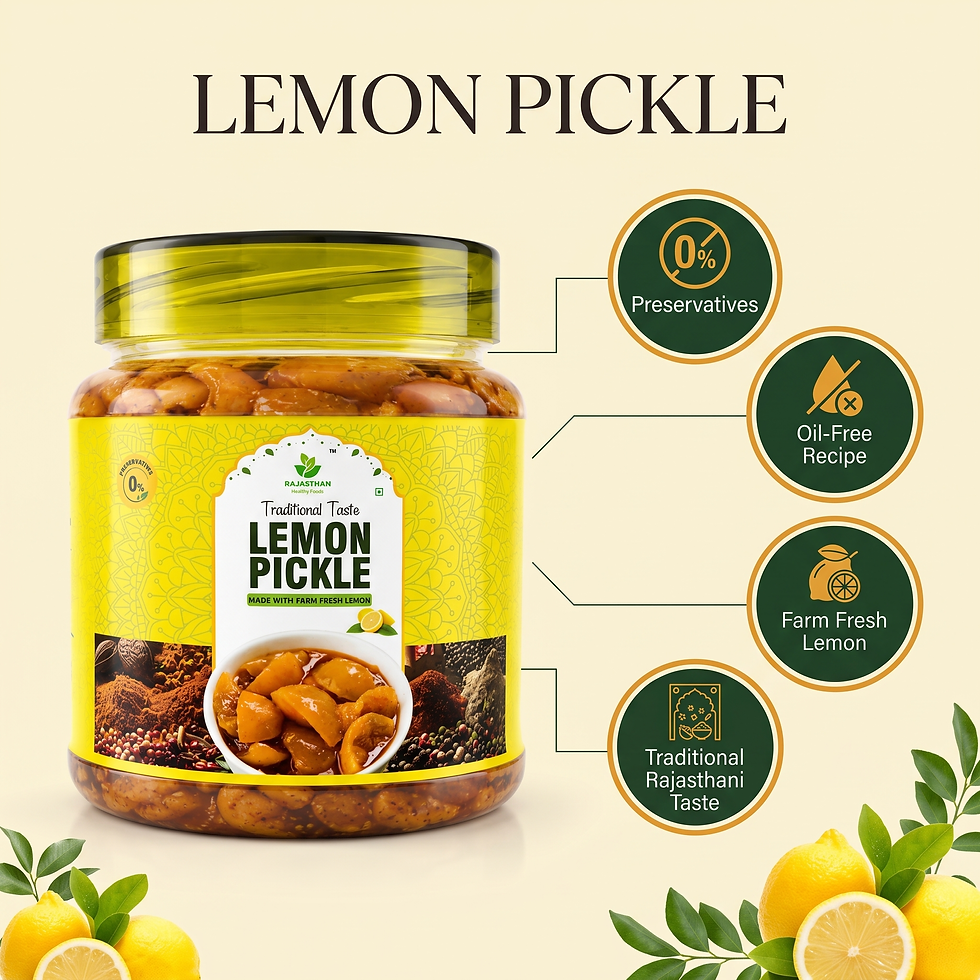
Note what's missing in the sweet, sun-cured style: oil. Traditional sweet lemon pickle needs no oil at all — the sugar syrup and lemon juice act as natural preservatives, which is exactly how we make ours at Rajasthan Healthy Foods.
How to Make Lemon Pickle at Home (Traditional Indian Style)
This is the classic salted-and-spiced nimbu achar that cures slowly in sunlight. It takes 3–4 weeks of patience, and the flavour keeps improving for months.
Wash 1 kg lemons thoroughly and dry them completely — even a drop of moisture can spoil the pickle. Wipe each lemon with a clean cloth.
Cut each lemon into 8 wedges, removing visible seeds.
In a large bowl, toss the wedges with 100–120 g rock salt and 1 tbsp turmeric until evenly coated.
Pack the wedges into a clean, dry glass jar (a traditional ceramic barni is ideal). Press down so the juice starts releasing.
Keep the jar in direct sunlight for 10–15 days, shaking it once daily. The peels will soften and the brine will deepen in colour.
Once the peels are tender, mix in 2 tbsp red chilli powder, 1 tbsp roasted methi powder, and half a teaspoon of hing.
Sun-cure for another 1–2 weeks. The pickle is ready when the peel cuts easily with a spoon. It matures beautifully for up to a year.
Sweet Lemon Pickle Recipe (Khatta-Meetha, Oil-Free)
Sweet lemon pickle is the most searched — and most loved — version of this achar, and it happens to be completely oil-free. This is the recipe closest to what we bottle at RHF.
Cure 1 kg lemon wedges in salt and turmeric in sunlight for 10–15 days as in the classic recipe above, until the peels soften.
Prepare a syrup: dissolve 750 g sugar (or grated jaggery for a deeper, earthier sweetness) in the lemon brine that has collected in the jar, adding a splash of water if needed. Simmer until it reaches a sticky one-string consistency.
Add the cured lemon wedges to the syrup with 1 tsp roasted cumin powder, 1 tsp garam masala or black pepper, and a pinch of black salt.
Simmer on low heat for 10–15 minutes until the wedges turn glossy and the syrup coats them like honey.
Cool completely and store in a dry glass jar. The pickle deepens in colour and flavour over the next two weeks.

Instant Lemon Pickle (Ready in 30 Minutes)
No time for sun-curing? Instant lemon pickle trades slow mellowing for quick cooking. Chop lemons into small pieces, pressure-cook or steam them for 3–4 whistles until soft, then toss with salt, turmeric, chilli powder, and a tempering of mustard seeds and hing (or sugar syrup for the sweet version). It's ready the same day — though purists will tell you the sun-cured version tastes like a different, better world. Instant pickle also has a shorter shelf life: refrigerate and finish it within a month.
Popular Lemon Pickle Variations Across India
Lemon and green chilli pickle — the fiery North Indian combination where chilli batons cure alongside the lemon wedges
Lemon dates pickle — a Gujarati-style sweet-sour achar where dates add caramel richness
Dry lemon pickle — cured until the brine evaporates, leaving intensely flavoured, chewy peels
White lemon pickle — a no-turmeric, no-chilli version popular in South India, salty and clean-tasting
Hill lemon pickle — made with galgal, the large pahadi lemon of Himachal and Uttarakhand
Kerala style lemon pickle — naranga achar, tempered in coconut oil with curry leaves, mustard, and a touch of vinegar
Benefits of Lemon Pickle: Why This Achar Earned Its Place
Lemon pickle has stayed on Indian thalis for centuries for good reasons:
Lemons are naturally rich in Vitamin C, and the peel — which you eat in a pickle — carries concentrated citrus goodness
Traditionally served as a digestive companion — a small piece with meals is an age-old Indian practice, especially with heavy or rich food
Fermented and cured foods like traditional pickles have long been valued in Indian food wisdom for gut-friendliness
The sweet, oil-free version is a lighter alternative to oily pickles for those watching their oil intake
It makes simple food exciting — khichdi, dal-chawal, or plain paratha become a meal to look forward to
An honest note: pickles are salty (and the sweet version contains sugar), so a little goes a long way. If you are managing blood pressure, diabetes, or any health condition, please consult your doctor about how much pickle suits your diet. This article shares traditional food knowledge, not medical advice.
Can You Store Lemon Pickle in an Aluminium Utensil?
No — never store lemon pickle (or any pickle) in an aluminium utensil, and avoid preparing it in one too. Here's the simple science: lemon pickle is intensely acidic, thanks to citric acid from the lemons, and salty from the curing. Acid and salt both react with aluminium. When pickle sits in an aluminium container, the metal slowly leaches into the food. This reaction can:
Give the pickle a metallic, bitter off-taste
Darken or discolour the pickle unnaturally
Corrode and pit the utensil itself over time
Introduce dissolved aluminium into your food — something no one wants in a preserve meant to last months
The same caution applies to reactive copper and unlined brass vessels. The right containers for lemon pickle are glass jars, ceramic barnis (the traditional choice), or food-grade stainless steel for short-term use. Glass and ceramic are non-reactive — they let the pickle mature for months without any change in taste or safety, which is exactly why your grandmother's achar always lived in a ceramic barni on the terrace.
How to Store Lemon Pickle the Right Way
Use a completely dry glass or ceramic jar — moisture is the number one cause of spoiled pickle
Always use a dry spoon; never dip a wet or used spoon into the jar
Keep the wedges submerged in their brine or syrup
Store in a cool, dry spot away from direct sunlight once the curing is complete
Well-made sun-cured lemon pickle lasts 1–2 years and actually improves with age; instant versions should be refrigerated and used within a month
What to Eat Lemon Pickle With
The classic pairings never fail: a wedge of sweet lemon pickle with moong dal khichdi is comfort itself, and it's equally at home beside parathas, dal-chawal, theplas, or curd rice. Many families also give a small piece of the sweet version to children as a treat — it tastes like a toffee that happens to be made of fruit.

Lemon Pickle Price & Where to Buy Online
Homemade is wonderful — but good lemon pickle takes 3–4 weeks of sun-curing, and store shelves are full of versions loaded with preservatives, artificial colours, and cheap oil. If you want the traditional taste without the wait, our Traditional Taste Lemon Pickle is made in small batches in Gangapur City, Rajasthan with farm fresh lemons, completely oil-free, and with 0% preservatives — the sugar, salt, and sun do all the preserving, just as they have for generations.

You can order it directly from our store at rajasthanhealthyfood.in, where you'll also find our full range of traditional pickles and murabbas. And if you love slow-preserved classics, don't miss our guide on how to make amla murabba at home — the winter companion to a good lemon pickle.
Swaad Bhi, Sehat Bhi — every jar is FSSAI certified, made without artificial preservatives, and shipped across India.

Frequently Asked Questions
Q: What is lemon pickle called in Hindi?
Nimbu ka achar. The sweet version is often called meetha nimbu achar or khatta-meetha nimbu ka achar.
Q: Can you store lemon pickle in an aluminium utensil?
No. The citric acid and salt in lemon pickle react with aluminium, leaching metal into the food and turning the pickle bitter and discoloured. Always use glass or ceramic jars.
Q: Is lemon pickle made with oil?
The spicy North Indian version often uses mustard oil, but traditional sweet lemon pickle is completely oil-free — salt, sugar, and sun-curing preserve it naturally. Our RHF Lemon Pickle is the oil-free style.
Q: How long does lemon pickle take to make?
Traditional sun-cured lemon pickle takes 3–4 weeks. Instant lemon pickle is ready the same day but must be refrigerated and eaten within a month.
Q: How long does lemon pickle last?
A properly cured, well-stored lemon pickle lasts 1–2 years at room temperature — and many say it tastes best in its second year.
Q: What is the price of lemon pickle?
Prices vary by brand and quality. Mass-market pickles are cheaper but typically use preservatives and refined oil; small-batch traditional pickles like ours cost a little more because they use farm fresh lemons and slow, natural curing. Check current prices and pack sizes on our online store.


Comments