How to Make Amla Murabba at Home: Traditional Recipe, Health Benefits & Storage Tips
- Rajasthan Healthy Foods
- Jul 2
- 5 min read

Amla murabba is one of India's oldest wellness traditions — whole Indian gooseberries slow-cooked in sugar or jaggery syrup until they turn soft, glossy, and golden. In Rajasthani households, a jar of amla ka murabba has always been the winter companion: one piece every morning, straight from the jar. In this guide, we cover everything — how to make amla murabba at home, its health benefits, how many pieces to eat in a day, and how to store it so it lasts for months.
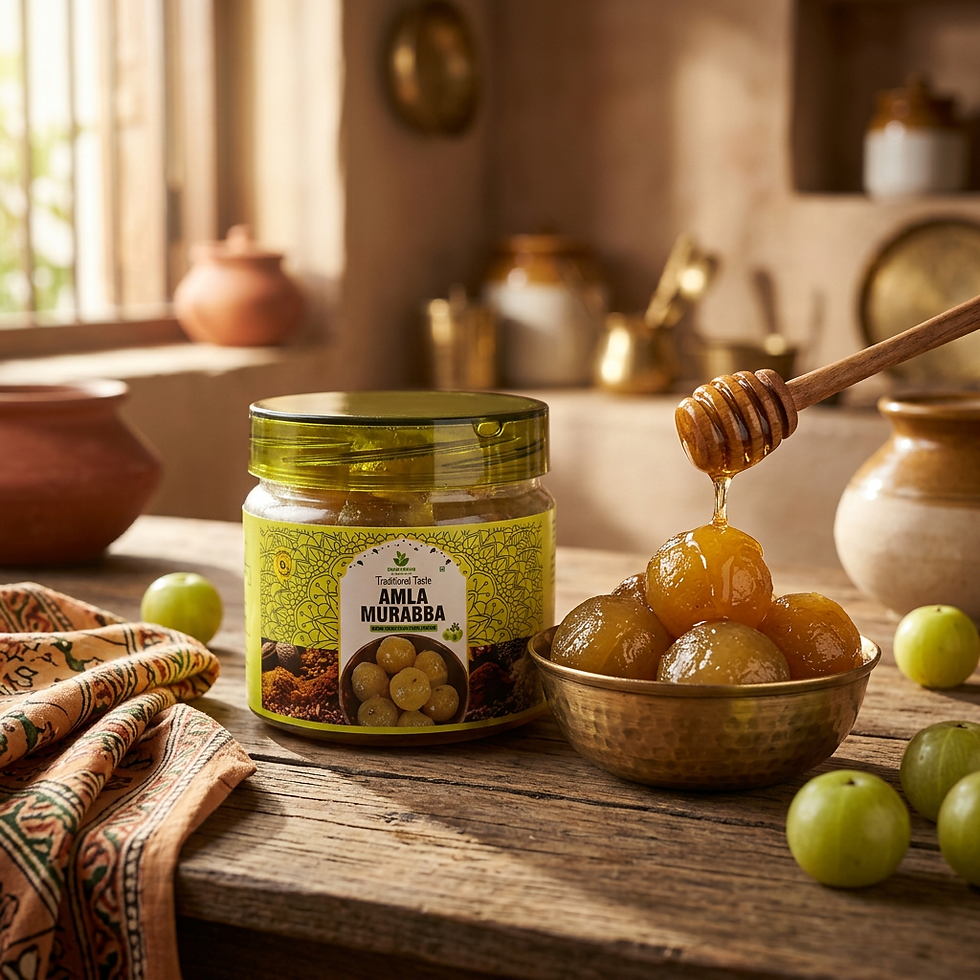
What Is Amla Murabba?
Amla murabba is a traditional Indian preserve made by cooking whole amla (Indian gooseberry) in sugar syrup, jaggery, or honey. The slow preservation process mellows amla's natural sourness while keeping the fruit intact, giving you a sweet, syrupy treat that's enjoyed as a daily wellness ritual across North India. Amla itself is celebrated in Ayurveda and is naturally one of the richest sources of Vitamin C among Indian fruits.
How to Make Amla Murabba at Home (Traditional Recipe)
Here is the classic method used in Rajasthani kitchens for generations. It takes patience — the syrup develops over 2–3 days — but the result is worth it.
Ingredients:
1 kg fresh, firm amla (Indian gooseberry)
750 g – 1 kg sugar (or jaggery — see variation below)
4–5 green cardamom pods, crushed
A pinch of saffron strands (optional)
1 tsp black pepper powder or dry ginger powder (optional)
Step-by-Step Method:
Wash the amla well and prick each one all over with a fork. This helps the syrup penetrate the fruit.
Soak the pricked amla in water overnight to reduce bitterness. Drain the next day.
Boil the amla in fresh water for 8–10 minutes until slightly soft but not mushy. Drain completely.
Prepare a syrup by dissolving the sugar in about 2 cups of water and simmering until it reaches a one-string consistency.
Add the boiled amla to the syrup and cook on low heat for 20–25 minutes.
Switch off the flame and let the amla rest in the syrup for 24 hours. The fruit slowly absorbs the sweetness.
The next day, simmer again for 10–15 minutes to thicken the syrup, then rest for another 24 hours. Repeat once more if needed — the murabba is ready when the amla turns translucent and golden.
Add cardamom and saffron in the final simmer. Cool completely and transfer to a clean, dry glass jar.

How to Make Amla Murabba with Jaggery
For a more rustic, mineral-rich version, replace sugar with an equal quantity of grated jaggery (gud). Jaggery syrup foams while cooking, so skim off the impurities that rise to the top. Jaggery murabba has a deeper caramel colour and an earthy sweetness that many families prefer in winter.
Amla Murabba with Honey or Without Sugar
If you want amla murabba without refined sugar, boil and soften the amla as described, then layer the cooled pieces with raw honey in a sterilised jar. Keep the jar in sunlight for 4–5 days, stirring daily, until the amla absorbs the honey. This no-cook honey method is slower but avoids added sugar entirely.
Is Amla Murabba Good for Health?
Amla has been valued in traditional Indian wellness for centuries, and murabba is simply the most enjoyable way to eat it daily. A few reasons it has remained a household staple:
Naturally rich in Vitamin C — amla is among the most concentrated fruit sources of it
Traditionally eaten in winter to support seasonal wellness and immunity rituals
Gentle on the palate — the sweetness balances amla's sharp sourness, so even children enjoy it
A wholesome alternative to processed sweets when you crave something sugary after meals
A note on honesty: amla murabba does contain sugar or jaggery, so enjoy it in moderation. If you are managing diabetes, are pregnant, or have any specific health condition, please consult your doctor before adding it to your routine. This article shares traditional food knowledge, not medical advice.

How to Eat Amla Murabba & How Many in a Day
The traditional way is simple: one piece of amla murabba every morning, ideally on an empty stomach, with a little of its syrup. Most households keep it to 1–2 pieces a day for adults and one small piece for children. You can also enjoy it:
With breakfast — alongside paratha or as a sweet finish to the meal
In the tiffin box — a healthier sweet treat for kids than packaged candy
As an evening craving-killer — one piece satisfies the sweet tooth naturally
Many people ask whether amla murabba can be taken with milk — traditionally, a gap of some time is kept between the two, as amla is sour in nature. If in doubt, simply enjoy your murabba earlier in the morning and milk later.

How to Store and Preserve Amla Murabba
Properly made amla murabba is self-preserving — the thick syrup is a natural preservative, which is why no artificial preservatives are ever needed. Follow these rules:
Always use a clean, completely dry glass jar — moisture is the enemy
Use a dry spoon every time; never dip a wet or used spoon into the jar
Ensure the syrup fully covers the amla pieces
Store in a cool, dry place away from direct sunlight; refrigeration extends life further
Homemade murabba stays good for 6–12 months when handled this way
No Time to Make It? Try Rajasthan Healthy Foods Amla Murabba
Making murabba at home takes 3–4 days of patience. If you'd rather skip straight to the good part, our Traditional Taste Amla Murabba is made in small batches in Gangapur City, Rajasthan — with farm fresh amla, slow-cooked the traditional way, and 0% preservatives. Just the way your dadi would make it.

Swaad Bhi, Sehat Bhi — that's our promise. Every jar is FSSAI certified and made without artificial preservatives, so you get the traditional taste of Rajasthan with modern trust.

Frequently Asked Questions
Q: What is amla murabba made of?
Whole amla (Indian gooseberry) preserved in sugar or jaggery syrup, often flavoured with cardamom and saffron.
Q: Can I make amla murabba without sugar?
Yes — use the honey-layering method described above, or use jaggery for an unrefined alternative.
Q: How many amla murabba can I eat in a day?
Traditionally 1–2 pieces daily for adults. Since it contains sugar, moderation is key — and consult your doctor if you have diabetes or are pregnant.
Q: How long does amla murabba last?
6–12 months when stored in a dry glass jar with a dry spoon, syrup covering the fruit, away from sunlight.
Q: When is the best season to eat amla murabba?
Winter is the classic murabba season — fresh amla arrives in the market from November to February — but a well-preserved jar lets you enjoy it year-round.


Comments