Is Namkeen Good for Health? A Simple Guide to Namkeen Nutrition
- DILIP MEENA
- Jul 1
- 4 min read

Namkeen is one of India's most loved snacks — crunchy, spicy, and impossible to stop at one handful. But if you care about your health, one question keeps coming up: is namkeen good for health, or is it just tasty junk food? The honest answer is that it depends almost entirely on two things — the oil it is fried in and the ingredients on the label. This guide breaks down namkeen nutrition in simple terms, so you can enjoy your favourite snack without the guilt.

Is Namkeen Healthy or Unhealthy?
Namkeen is not automatically unhealthy. Traditional namkeen is made from wholesome bases like gram flour (besan), lentils, peanuts, and puffed grains — all of which provide plant protein and fibre. The problem is not the snack itself; it is what many mass-market brands add to it: cheap palm oil, excess salt, artificial flavours, and preservatives.
In other words, two packets of "namkeen" can be nutritionally worlds apart. A clean, groundnut-oil namkeen with no preservatives can be a reasonable snack in moderation, while a palm-oil, additive-heavy version is closer to junk food. Learning to read the label is what separates a smart snacker from an impulse buyer.
The Nutrition Behind Namkeen
Most Indian namkeens are built on ingredients that actually carry real nutritional value:
Gram flour (besan): a good source of plant protein and dietary fibre.
Lentils and pulses: add protein and keep you feeling full for longer.
Peanuts and groundnuts: provide healthy fats, protein, and antioxidants.
Puffed grains and millets: lighter, often baked or roasted rather than deep-fried.
Spices like cumin, ajwain, and turmeric: add flavour and traditional digestive benefits.
The nutrition profile only turns negative when these good bases are deep-fried in low-quality oil, over-salted, or loaded with chemicals to extend shelf life. That is where the health question really lives.
The Oil Question: Why Groundnut Oil Beats Palm Oil
If there is one factor that decides whether your namkeen is healthy or not, it is the cooking oil. Most large namkeen brands use palm oil because it is cheap and widely available. But cost-saving for the manufacturer does not mean it is the better choice for you.
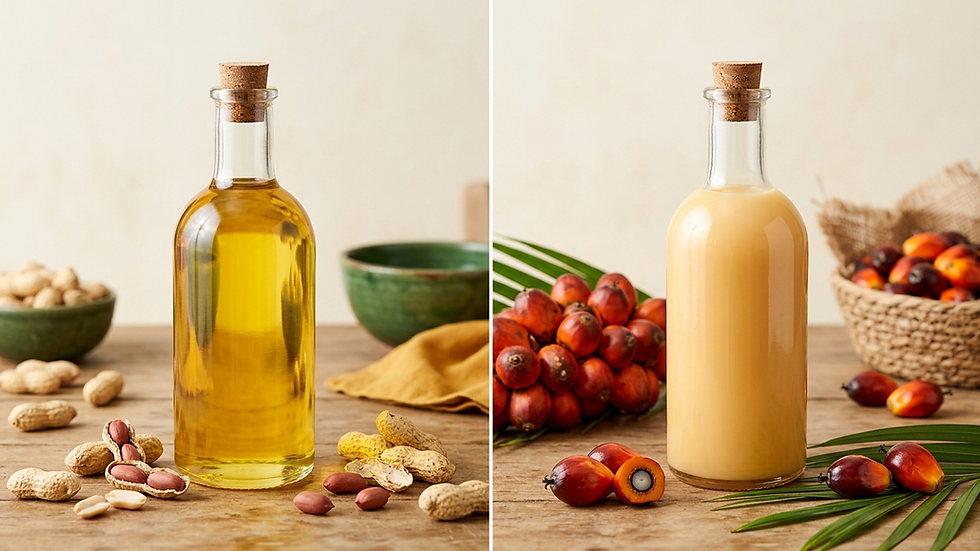
Here is why the oil matters so much:
Palm oil is high in saturated fat and is used mainly to cut production costs, not to improve nutrition.
Groundnut (peanut) oil has a better fat balance, a high smoke point suited to frying, and a naturally nutty taste.
Groundnut oil carries vitamin E and antioxidants that cheap refined palm oil typically lacks.
This is exactly why Rajasthan Healthy Food makes its namkeen entirely in groundnut oil — with no palm oil at all. When you pick up any packet, the very first thing you should check is the oil. If it says palm oil, you are paying for the manufacturer's savings with your own health.
Preservatives, Salt, and What Else to Watch On the Label
Beyond oil, three more things decide how healthy a namkeen really is:
Preservatives: Long shelf-life snacks often rely on chemical preservatives. Freshly made, preservative-free namkeen is always the healthier pick.
Salt (sodium): Excess salt is common in mass-market namkeen. Look for balanced seasoning rather than overpowering saltiness.
Artificial colours and flavours: Bright, artificial shades and synthetic flavour enhancers are red flags on any ingredient list.
A clean-label namkeen keeps the list short and recognisable: a wholesome base, groundnut oil, real spices, and salt — nothing you cannot pronounce.
How Much Namkeen Can You Eat? (Smart Portion Tips)
Even the cleanest namkeen is still a fried, calorie-dense snack, so portion size matters. The goal is mindful snacking, not endless munching straight from the packet.

Serve a small bowl (roughly a handful) instead of eating from the big packet.
Pair namkeen with a cup of tea or a glass of water rather than sugary drinks.
Treat it as an occasional snack between meals, not a meal replacement.
Choose roasted or baked varieties when you want an even lighter option.
Always check the packet: if the oil is groundnut oil and there are no preservatives, you are already ahead.
The Verdict: Choose Clean Namkeen, Not Junk
So, is namkeen good for health? Namkeen can absolutely be part of a balanced lifestyle — as long as you choose the right kind. The difference between a healthy snack and junk food comes down to the oil, the ingredients, and your portion size. Skip the palm-oil, preservative-heavy packets, and reach for clean, freshly made namkeen instead.
Rajasthan Healthy Food makes traditional Rajasthani namkeen the honest way — 100% in groundnut oil, with no palm oil and no preservatives. It is the same taste you grew up loving ("Swaad bhi, Sehat bhi"), made to fit a modern, health-conscious life.
Frequently Asked Questions
Is namkeen good for weight loss?
Namkeen is calorie-dense, so it is not a weight-loss food on its own. In small portions, a clean groundnut-oil namkeen with no preservatives can fit into a balanced diet better than palm-oil snacks.
Which oil is best for namkeen?
Groundnut (peanut) oil is one of the best choices for namkeen because of its high smoke point, better fat profile, vitamin E content, and naturally nutty flavour — unlike cheap palm oil used mainly to cut costs.
Is namkeen made without palm oil available in India?
Yes. Rajasthan Healthy Food makes namkeen entirely in groundnut oil with no palm oil and no preservatives, so you can enjoy traditional Rajasthani snacks with a cleaner label.
Can I eat namkeen every day?
It is best enjoyed in moderation. A small daily portion of clean, preservative-free namkeen is fine for most people, but it should complement — not replace — balanced meals.


Comments